
Popular Live Commerce Genres and the Keys to Success
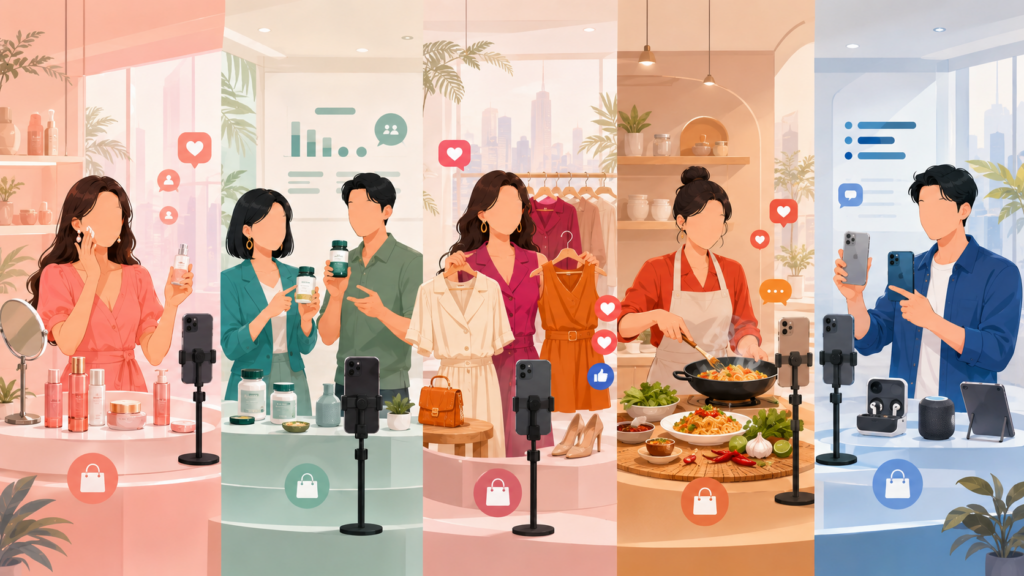
Here are the live commerce genres that sell particularly well in Singapore and Southeast Asia, along with the success patterns behind each.
- Beauty & Skincare (Largest Category): The host applies products to their own skin in real time, giving live reviews. An honest approach that even highlights downsides builds trust and drives purchases. Micro-influencers with 10,000–100,000 followers often achieve higher conversion rates than large accounts. K-beauty brand Beauty of Joseon, for example, sold tens of thousands of units of a single product through TikTok Shop.
- Health Food & Supplements: Ingredient comparisons and expert dialogue formats are popular. Presenting evidence with numbers is a key purchase driver. The Purest Co is well known in the industry as a model for effective Shopee Live use in this category.
- Fashion Try-On Lives: Multiple outfits are tried on in real time while viewer votes are taken. This sense of participation extends watch time and boosts TikTok's algorithm metrics (Watch Time and Engagement).
- Local Food & Beverage: Selling ingredients and condiments while cooking live. Multicultural food content typical of Singapore attracts strong viewership, and smaller brands often use Shopee Live and Instagram Live for this format.
- Electronics & Gadgets: Spec comparison demos are standard. Brands like Samsung use official TikTok Shop lives to reach younger audiences directly, and formats that show numbers — such as "old product vs. new product" — build credibility.
A format common to successful live streams is athree-person setup — MC, product explainer, and reaction host —delivering fast-paced banter, use of FOMO (fear of missing out) triggers like "only 10 left" or "ending in 5 minutes", andregular streaming three or more times a weekto gain algorithmic advantage. Rather than a one-off live, consistent operation builds both reach and trust over time.
The core of "trust" from the era of word-of-mouth spreading person to person remains intact — the stage has simply shifted to live streaming. For Japanese companies looking to establish a presence in Asian markets, understanding this trend accurately will be essential.